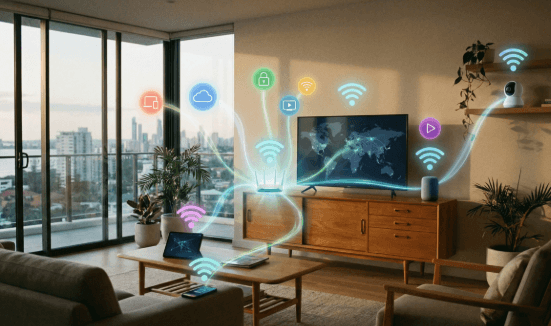
Smart homes integrate sensors, actuators, and intelligent software to optimize comfort, energy use, and security. Centralized and edge processing coordinate lighting, climate, and access with occupancy-aware automation and voice-enabled scheduling. Usability, reliability, and interoperability shape accessible design and ambient automation, enabling stable routines and proactive adjustments. Balancing privacy with convenience requires secure interoperability and transparent data policies. Starting from a cohesive hub strategy and scalable standards, the next steps reveal how autonomous, customizable living can evolve—and what tradeoffs must be considered.
What Makes a Modern Smart Home Tick
A modern smart home ticks through an integration of sensors, actuators, and control software that coordinate to optimize comfort, energy use, and security.
The architecture comprises centralized and edge processing, standardized protocols, and modular components.
Smart lighting adapts with occupancy and daylight, while voice assistants enable hands-free control and scheduling, reinforcing autonomy within an interconnected, scalable system.
How Smart Tech Improves Daily Living
Smart technology enhances daily living by streamlining routine tasks, reducing friction, and extending decision-making capabilities through automated sensing, processing, and actuation.
The discussion analyzes usability, reliability, and interoperability, emphasizing accessible design and ambient automation as core drivers.
Systems integrate sensors and actuators to support consistent routines, proactive adjustments, and scalable customization, enabling individuals to pursue autonomy while maintaining predictable, measurable outcomes in everyday environments.
Privacy, Security, and Energy: Balancing Safety With Convenience
Privacy, Security, and Energy considerations in smart homes require a structured assessment of trade-offs between safeguarding data and sustaining user convenience.
The analysis emphasizes privacy concerns, data localization, and security best practices, leveraging device interoperability to minimize risk.
Attention to energy management is integrated with robust authentication, regular updates, and transparent data policies, enabling informed choices while preserving user freedom and operational efficiency.
How to Start Your Connected Home: Platforms, Devices, and Next Steps
Choosing a starting point for a connected home requires a structured approach that weighs platform compatibility, device ecosystems, and the practical steps needed to achieve a cohesive network.
The analysis emphasizes platform integration and device interoperability as core constraints, guiding selection of hubs and standards.
Energy monitoring and well-defined user workflows enable scalable expansion without compromising security, reliability, or freedom of customization.
See also: magazineover
Frequently Asked Questions
How Do Smart Homes Affect Indoor Air Quality?
Smart homes influence indoor air quality through filtration, sensing, and control systems; air quality metrics track pollutants while ventilation automation adjusts airflow. This approach supports healthier environments, balancing energy use with occupant comfort and freedom to customize conditions.
Can Smart Devices Boost Home Resale Value?
Smart investments, perhaps surprisingly, can boost resale value as households prize automation and efficiency; the resale impact hinges on credible installation quality, proven reliability, and demonstrated energy savings, not novelty.
What About Accessibility for Disabled Users?
Accessible interfaces reduce barriers and enhance independence for disabled users; they enable user empowerment through adaptable controls, scalable automation, and inclusive design. This analytical perspective highlights practical benefits and technical considerations for equitable, freedom-centered smart home ecosystems.
Do Smart Homes Require Professional Installation?
Yes, smart homes may require professional installation for complex systems; however, some kits enable self-installation. Professionals address wiring challenges, ensure safety, and optimize integration, while offering guidance for owners seeking freedom through reliable, customized configurations.
How Reliable Are Cloud Services for Smart Devices?
Cloud services for smart devices are generally reliable but imperfect; cloud latency and intermittent outages can affect responsiveness. Device interoperability remains crucial, as robust standards minimize disruption and preserve user autonomy during network issues and cross‑brand integration.
Conclusion
In a world of seamless automation, the smart home stands between convenience and constraint. Juxtaposing instant control with quiet data trails reveals a paradox: comfort grows as privacy recedes, yet transparency and standards offer a stabilizing counterbalance. The hub strategy, interoperable standards, and clear policies emerge not as obstacles but as essential safeguards. Ultimately, a well-orchestrated, energy-aware system delivers predictable routines while preserving autonomy, turning connected living from a trend into a trusted, sustainable infrastructure.